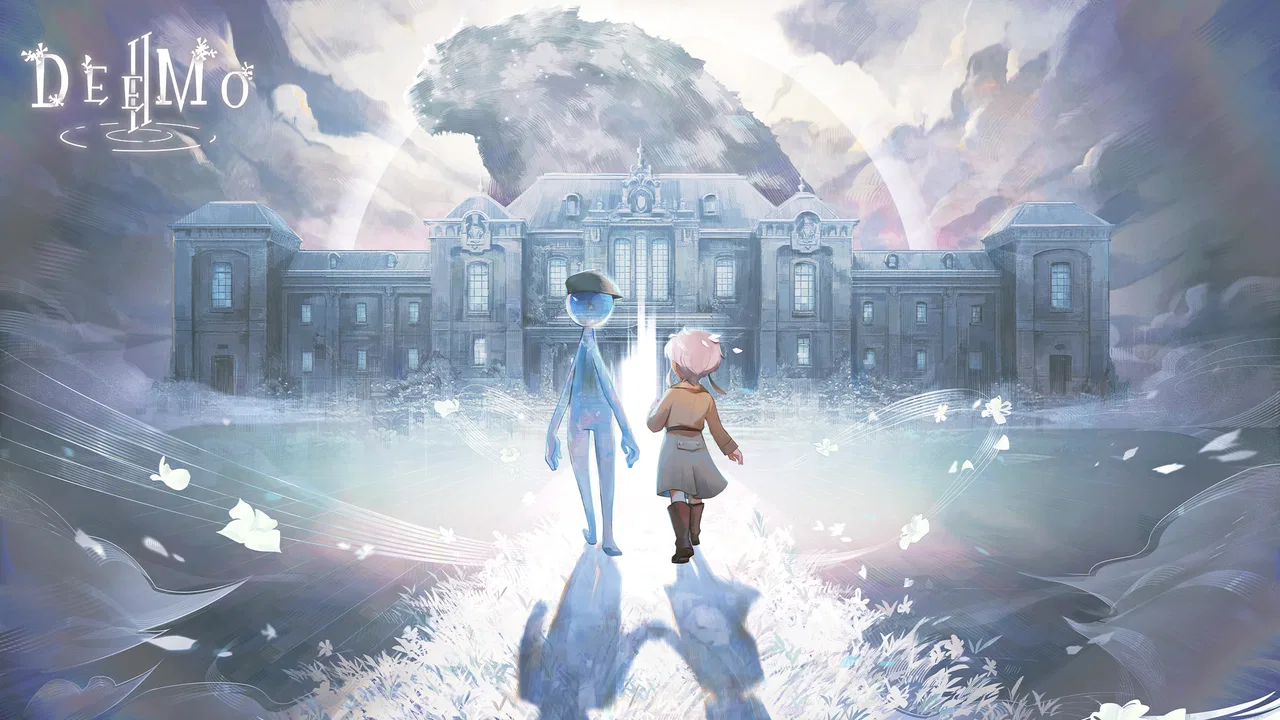
DEEMO II
- 4.6
- Rating
- 1.00M
- Installs
- Free
- Price

 Analysis by App-foxy
DEEMO II is the kind of music game I open when I want something more absorbing than a quick rhythm challenge. It combines note timing with a storybook atmosphere, exploration, and a strong sense of musical discovery. After spending time with it, I found that its biggest appeal is not simply tapping along to songs; it is the way the music, rain-soaked world, and narrative mood work together.
That combination also makes it a more specific recommendation than a typical mobile rhythm game. If you want fast competitive rounds, constant score chasing, or a simple playlist you can dip into for a minute, this may feel slower and more elaborate than necessary. If you enjoy atmospheric adventures and are willing to learn a distinctive rhythm system, it has much more personality than most alternatives.
A musical adventure with a deliberate pace
Rayark International Limited developed DEEMO II as a free music game for Android and iOS. It carries an Everyone age rating, so its presentation is broadly approachable, although the emotional tone and story themes are still more thoughtful than the rating alone might suggest. The game was released on January 12, 2022, and the current version is 4.1.7, with a minimum operating system requirement of 10.
You May Also Like

 Blood Strike: 2.5 Anniversary
Blood Strike’s Loadouts Turn Every Drop Into a Tactical Gamble
A close look at Blood Strike’s custom loadouts: how fast access to signature weapons reshapes its battle royale rhythm, rewards preparation, and narrows the gap between fights.

 Pandora - Music & Podcasts
Pandora’s Music Is Easy to Start, but Harder to Recover
Pandora’s strength is its low-effort path from a seed to a station. Its weak spot is how much confidence it asks you to place in connection, setup, and quiet recovery.

 8 Ball Pool
 Is Built on Rivalries, Rematches, and Routine
A close look at the rivalries, rematches, shared routines, and unanswered safety questions that turn a quick pool match into a persistent mobile community.

 Samsung Music
’s Quiet Strength Is Playing What You Already Own
Its reach comes less from spectacle than from dependable access to a personal library. That simplicity is both the app’s strongest retention engine and its ceiling.

 AccuWeather: Weather Radar
AccuWeather Review: A Quick, Clear Forecast for Everyday Decisions
For everyday plans, the best forecast is the one you can understand quickly. AccuWeather makes rain timing, radar, and local conditions easy to act on, with a few trade-offs.

 Hill Climb Racing
Why Hill Climb Racing Still Turns Crashes Into One More Run
A tiny car, a bumpy hill and one more upgrade: Hill Climb Racing keeps resurfacing because its simple chaos makes every near-miss feel personal.
More From Our News Desk
View All News


The central experience moves between narrative scenes, exploration, and rhythm play. I liked that the music does not feel pasted onto an unrelated game world. Songs are part of the identity of the setting, and the visual presentation gives each performance more weight than a bare score screen would. The result feels closer to participating in a musical fantasy than simply completing a sequence of charts.
The opening hours are especially good at establishing this mood. Instead of throwing every system at me immediately, the game gives its world room to breathe. That patience is useful for atmosphere, though players who expect instant action may read it as unnecessary delay. I recommend playing with headphones if possible, because the arrangement and surrounding sound design are important to the experience.
The interface is generally easy to understand, but the rhythm play has its own feel. Notes approach the play area in a way that rewards watching the timing line and learning the movement rather than relying only on instinct from other music games. Players coming from a lane-based title may need a short adjustment period. I found that the game became much more comfortable once I stopped trying to force habits from other rhythm apps onto it.
What the free starting point really offers
There is no purchase required to begin, which matters because DEEMO II is designed as a substantial experience rather than a tiny free sample. The store price is free, while optional in-app purchases range from $0.99 to $74.99 per item. That wide range is worth keeping in mind before spending: the game can be entered without paying, but the presence of high-priced individual items means a careful player should review each purchase rather than treating every offer as a small impulse buy.
I would not describe the free entry as a promise that every part of the long-term experience will feel equally unrestricted. The sensible approach is to play first, understand how the progression feels, and only then decide whether an optional purchase improves your personal experience. Since the game is music-focused, the value of an extra song or content bundle depends heavily on whether you actually enjoy its style. A large collection is not automatically worthwhile if only a few tracks suit your taste.
For families, the Everyone rating makes the game easier to consider, but I would still pay attention to purchases on the device. A child may understand the gameplay without understanding the difference between a free starting point and an optional item. The safest routine is to use the device’s normal purchase controls and discuss spending before handing the game over, especially because the listed upper price is much larger than a typical one-time mobile add-on.
This is also a good example of why “free” should be read as an access point rather than a complete description of the business model. I appreciate being able to try the core atmosphere without an upfront charge. At the same time, I would feel more comfortable recommending it to a friend if that friend decided in advance whether they wanted a strictly no-spend playthrough or were open to buying selected content.
Progress feels musical, but patience matters
Progress is tied to more than reflexes. The story gives context to the songs, and exploration helps the game feel like an adventure instead of a menu of disconnected performances. That structure creates a useful change of pace: after concentrating on a chart, I can return to the world and let the narrative carry the momentum.
The trade-off is that the game does not always deliver immediate progress in the way a short arcade rhythm title does. Some sessions are about improving timing, while others are about moving through the setting or following the story. If I only have a few minutes and want a clear win, a simpler rhythm game is more convenient. DEEMO II works better when I can give it enough attention to appreciate the transition between its parts.
One practical tip is to treat early failures as information rather than a reason to rush into spending. When a chart feels difficult, I first look at whether the problem is reading, hand position, or unfamiliar note movement. Replaying with a calmer approach can reveal that the difficulty came from using the wrong visual habit. This is one of the game’s less obvious strengths: improvement often comes from understanding its language, not merely repeating taps faster.
Another useful habit is to separate story sessions from practice sessions. When I am following the narrative, I do not want to interrupt the mood by obsessing over every imperfect performance. When I am practicing, I focus on timing and repetition without expecting the surrounding adventure to provide constant momentum. Keeping those goals separate makes the game feel less demanding and helps prevent a difficult song from spoiling the story.
There is also a psychological pressure that appears in many rhythm games: the temptation to measure every attempt against a perfect result. DEEMO II’s atmosphere can make that pressure feel more personal because the performances are connected to the world and characters. I found it more enjoyable when I treated accuracy as a gradual skill rather than a test of whether I belonged in the game.
Fairness when scores and purchases meet
DEEMO II is not the first game I would choose for a purely competitive environment. Its strongest identity is atmospheric and narrative, not a public contest built around proving who has the highest score. That distinction matters when considering fairness. A player can enjoy improving technique without needing to turn every song into a ranking exercise.
For personal play, the main fairness question is whether optional spending changes what a player can experience or how quickly they can progress. The purchase range confirms that paid items exist, but it does not by itself explain every effect those items have on progression. I therefore would not make a stronger claim than the available purchase information supports. My practical advice is simple: judge an item by what it visibly provides in the purchase screen, and do not assume that a higher price means better musical value.
In a rhythm game, fairness also depends on whether skill remains meaningful. Here, timing and familiarity still matter. Buying something does not remove the need to understand the charts or develop consistent input. That makes the game more satisfying for players who want to improve, although it may frustrate anyone hoping to bypass a demanding section entirely.
Players who dislike any form of optional monetization should approach cautiously. The free entry is useful for testing the game, but the listed purchase range means the store layer is not something to ignore. I would skip spending until I had played enough to know whether the music and pacing genuinely fit my taste. For me, that is a better fairness test than deciding from the first few minutes.
Compared with a traditional rhythm game that asks for a single purchase, the free model is easier to sample but potentially harder to evaluate at a glance. Compared with a competitive service built around constant rankings, DEEMO II feels less focused on status and more focused on mood and progression. Neither approach is automatically superior. The right choice depends on whether you value a complete, predictable purchase or the ability to try a larger musical world before committing money.
Where it fits in everyday play
A realistic use case is a quiet evening after work or school. I can play a story segment, complete a few songs, and stop without needing to finish a long competitive session. The game suits that reflective setting better than a noisy, rapid-fire arcade experience. It also works for a longer weekend session when I want to explore rather than simply clear as many charts as possible.
It is less suitable during a short commute if the connection, concentration, or surroundings are unreliable. Rhythm input demands attention, and the narrative loses some of its effect when constantly interrupted. I would also avoid starting a difficult song while multitasking. The game rewards looking closely at the screen, listening carefully, and accepting that a song may require several attempts.
For someone who already plays music games, the main adjustment is learning the visual rhythm language. Do not judge it solely by the first few charts. Give yourself time to understand how notes arrive and how the timing feels under your fingers. For someone new to the genre, the story and presentation provide a gentle reason to keep learning, but the more demanding songs can still require patience.
The game is also a better match for players who value soundtracks as part of a larger fictional world. If your priority is a huge variety of unrelated popular songs, a dedicated music library or another rhythm title may serve you better. DEEMO II’s appeal comes from curation and atmosphere, not from behaving like an all-purpose music service.
Small frictions that affect the experience
The deliberate pacing can become a limitation. I sometimes wanted to reach the next musical challenge immediately, but the adventure structure asked me to slow down. That is valuable when I am in the mood for the story, yet inconvenient when I only want a quick technical workout.
The learning curve is another point of friction. Familiarity with rhythm games helps, but it does not eliminate the need to adapt. Players who prefer conventional lanes and predictable note paths may find the transition less natural than expected. I would not call that a flaw in itself; it is simply part of the game’s identity, and it should be considered before choosing it over a more standard alternative.
Monetization can also make the long-term decision less straightforward. The game is free to start, but optional items span a broad price range. I prefer to decide slowly and avoid buying during a moment of excitement after finishing a favorite chapter or song. A useful personal rule is to wait, replay the content already available, and ask whether the purchase adds something I will use repeatedly.
Device compatibility deserves a quick check as well. The minimum operating system is 10, so an older device below that requirement is not a suitable starting point. On a supported device, I would still use headphones and close unnecessary apps before a serious rhythm session. That is not because the game promises a particular performance level, but because rhythm timing is easier to judge when the phone is treated as a focused game device rather than a background task.
Who should play, and who should pass
I recommend DEEMO II to players who want a music game with a strong fantasy setting, a story-led structure, and songs that feel connected to the world. It is especially appealing if you enjoy gradual mastery and do not need every session to produce a quick, obvious reward. The game’s average rating is 4.6 from around 28 thousand ratings, and it has passed one million installs, which reflects a substantial audience without replacing the need to decide whether its style suits you.
I would point a friend toward it if they liked atmospheric adventures but wanted something more interactive than a visual novel. I would also recommend it to rhythm players who are willing to learn a different presentation rather than demanding the same controls they already know. The free starting price makes that trial easier, provided they keep the optional purchase range in mind.
I would not choose it for someone who wants a completely predictable one-time purchase, instant access to every song, or a highly competitive leaderboard-centered experience. I would also suggest another game for anyone who dislikes story interruptions between music sessions. Those are not minor preferences here; they influence the basic rhythm of play.
My trust verdict after playing
The best way to approach DEEMO II is as a free musical adventure first and a spending decision second. Its strongest qualities are its mood, its unusual rhythm presentation, and the way its songs support a larger journey. Its weaknesses are equally clear: a slower pace, an adjustment period for the controls, and a purchase model that deserves attention before money changes hands.
Rayark International Limited has made something more distinctive than a generic tap-to-score game. I came away remembering the feeling of moving through its world as much as the act of completing songs. That is a meaningful strength, but it also means the game will not satisfy every rhythm fan. It asks for patience and a willingness to let the music sit beside the story.
My final recommendation is to install it only if that combination sounds appealing, then spend enough time with the free experience to understand the progression and the music before considering any optional item. If the atmosphere draws you in and the note system begins to feel natural, DEEMO II can become a rewarding long-term companion. If you want immediate competition or a clean, fixed-price library, choosing a more direct rhythm alternative will probably leave you happier.
FAQs for DEEMO II
01What is the main storyline of DEEMO II?
DEEMO II follows the journey of Echo, a young girl, and Deemo, a mysterious figure, as they navigate a world plagued by endless rain. The story unfolds as they seek to uncover the truth behind this eternal storm and find a way to restore harmony. Players experience an enchanting narrative filled with mystery and emotion.
02How does the gameplay in DEEMO II differ from the original DEEMO?
While DEEMO II retains the core rhythm-based gameplay of the original, it introduces enhanced visuals and a more immersive storyline. The game features improved mechanics, new songs, and dynamic environments that evolve with the narrative. These additions provide a fresh experience while maintaining the charm that fans loved from the first installment.
03What types of music are available in DEEMO II?
DEEMO II offers a diverse selection of music, ranging from classical to contemporary genres. Players can enjoy a rich library of tracks that cater to different tastes, ensuring a captivating rhythm experience. The game frequently updates its music catalog, allowing players to discover new songs and challenges over time.
04Is DEEMO II suitable for new players who haven't played the first game?
Yes, DEEMO II is designed to be accessible to both newcomers and fans of the original game. The intuitive controls and engaging storyline make it easy for new players to enjoy without prior experience. At the same time, returning players will appreciate the deeper narrative and enhanced gameplay mechanics.
05What are the device requirements for playing DEEMO II?
DEEMO II requires a device with at least iOS 10.0 or Android 5.0. It's recommended to have a device with sufficient RAM and storage to ensure smooth gameplay and download additional music content. Players should check their device compatibility before downloading to ensure the best gaming experience.
Pros
- Stunning visuals and artistic design.
- Engaging and emotional storyline.
- Wide variety of musical tracks.
- Smooth and intuitive gameplay controls.
- Regular updates with new content.
Cons
- Requires a stable internet connection.
- Some in-app purchases necessary.
- Large file size may be an issue.
- Can be challenging for beginners.
- Limited offline play options.

DEEMO II
Gallery